ANTHOLOGIA
The Hellenic Anthology, as recognized by modern scholars, is a collection of approximately 4,000 to 6,000 epigrams and poems by ancient Greek and Byzantine poets, spanning from the 7th century BC to the 10th or 12th century AD. This anthology was first published in the late 16th century. Its core content is primarily drawn from two key manuscripts: the Palatine Anthology and the Planoudis Anthology.
By some definitions, the Greek Anthology comprises around 3,700 poems from the Palatine Anthology and about 400 poems from the Planoudis Anthology, totalling approximately 4,100 epigrams and poems. Consequently, the term “Greek Anthology” is often used interchangeably with the Palatine Anthology.
The Greek Anthology (Anthologia Graeca) refers to a series of published volumes featuring Greek epigrams, beginning in 1494 and continuing to the present day, with content that has evolved over time.
“The Palatine or Greek Anthology is one of the most valuable sources for getting to know ancient Greek poetry but also poetry in general.”
“It doesn’t only acquaint us with an era of 17 centuries (from the 7th century BC to 950 AD) but teaches us. Its 3,700 poems (epigrams around 23,000 verses) are not only poetry. From the epic epigrams of antiquity, which were intended to elevate the soul to the Platonic chariot that would lead them to the divine, to the verses of the Alexandrian era, which highlighted the joy of life and pleasures, all this fits into just a few verses that reveal the full spectrum of human existence.
“Epigrammatic poetry, carved on marble. This is a huge collection that includes the most important exponents of the genre, giving an insight into how death, existence, love were perceived in different times and centuries.”
The precious manuscript of the Palatine Anthology was discovered in the library of Heidelberg University by a 22-year-old French scholar. Unfortunately, his critical edition remained unfinished when Catholic troops sacked the library.
Following these events, the manuscript was presented as a gift to the Pope by Maximilian of Bavaria. It later found its way to France during Napoleon’s campaigns. After Napoleon’s defeat at Waterloo, France was asked to return the manuscript to its original home. However, only the first volume made its way back to Germany.
As a result, the Palatine Anthology remains divided between two countries—its pages scattered between the University Library of Heidelberg and the National Library of France—a testament to its enduring value and remarkable survival through centuries of upheaval.
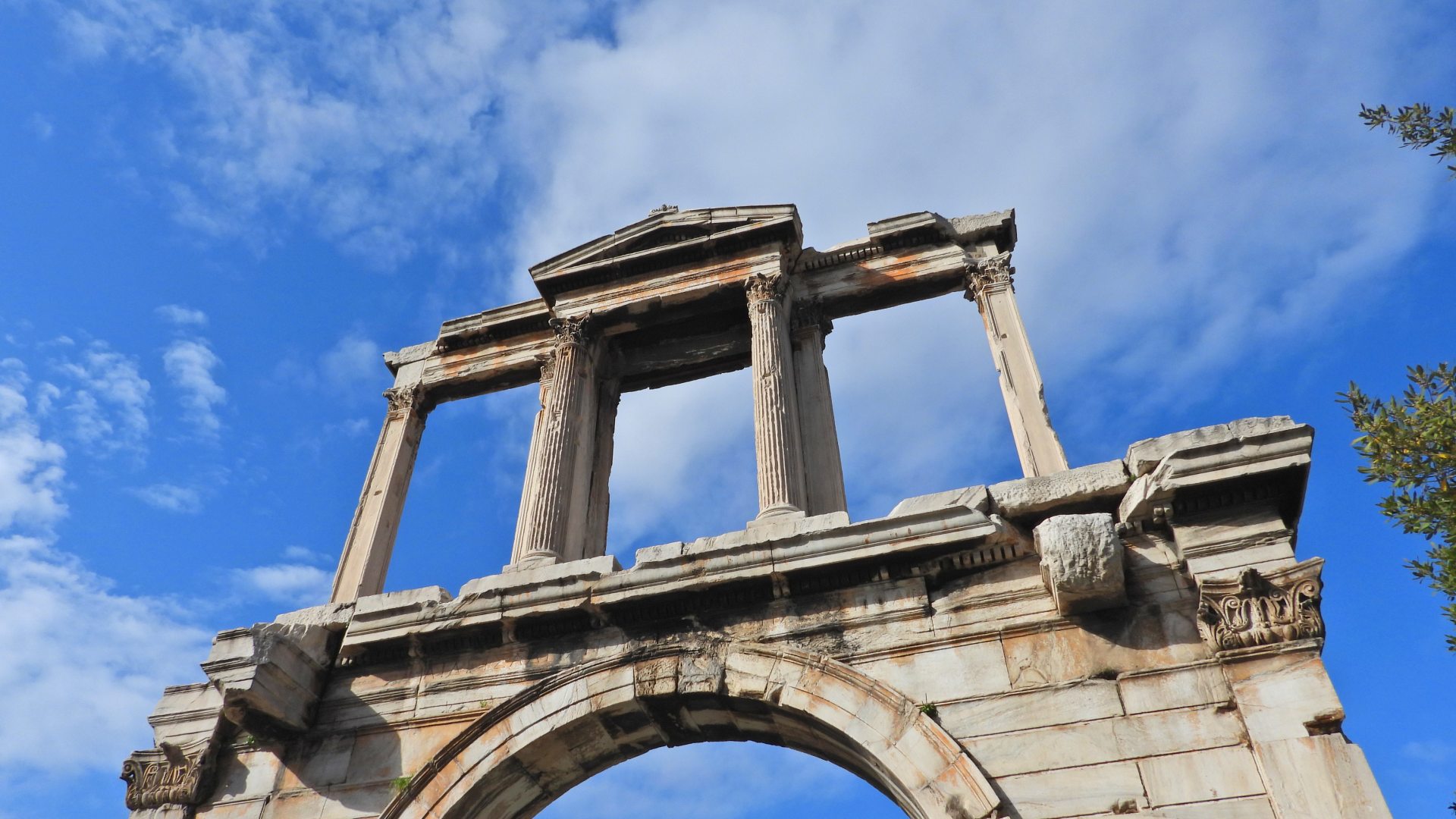
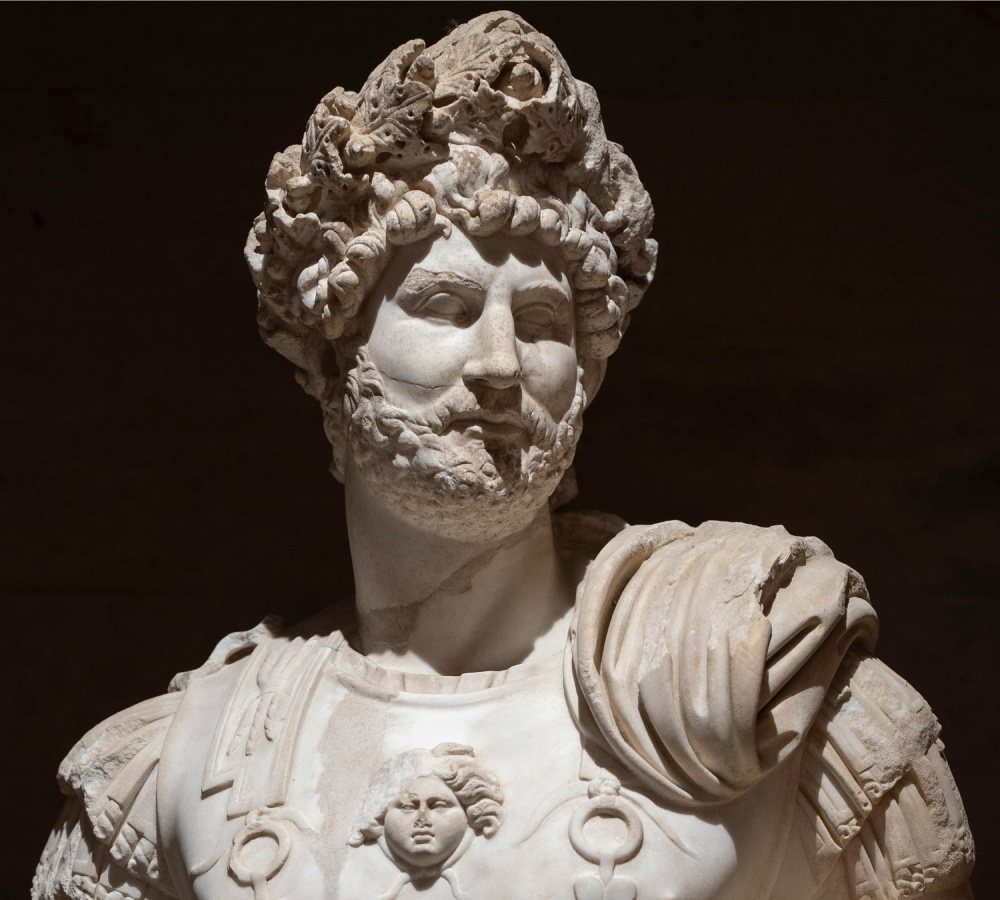
Emperor of Rome, genius and wit. He led the Roman Empire for 29 years (117–138 AD) and was known for his extensive travels and deep philhellenism. Hadrian was born in Spain. An example of his philhellenism is the fact that he often wore Greek garments. He consistently presented Athens as the city of the spirit. He visited Athens three times and stayed longer there than in any other city.
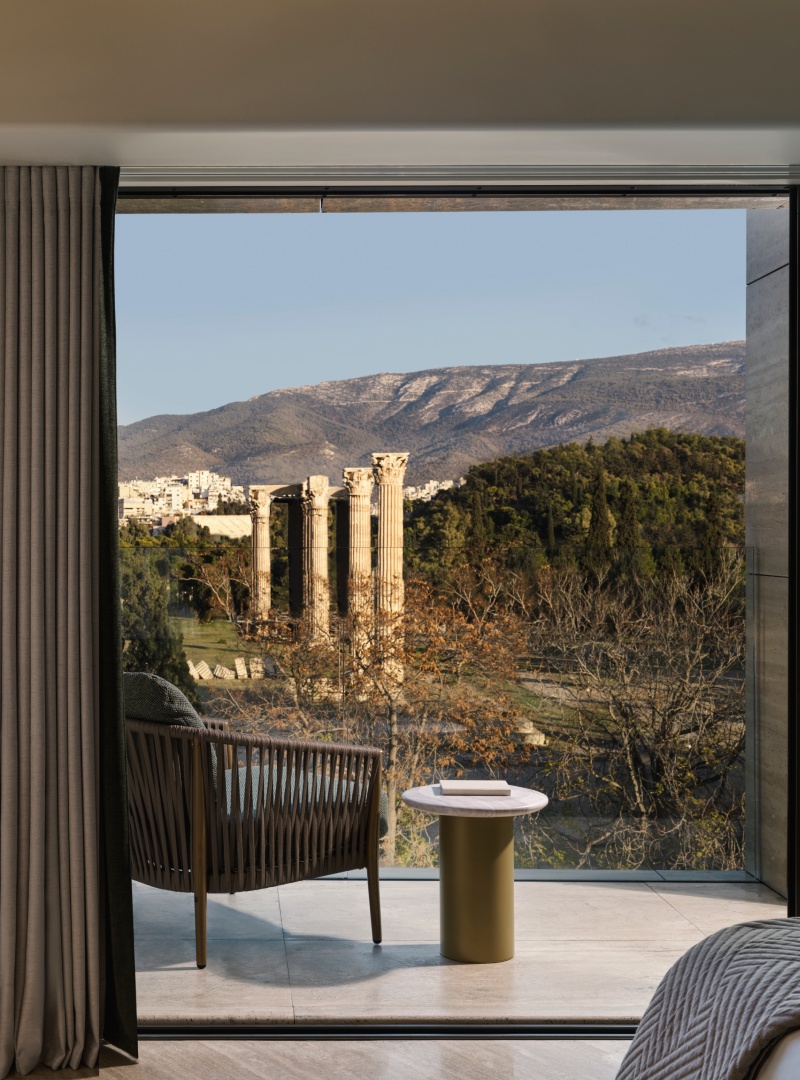
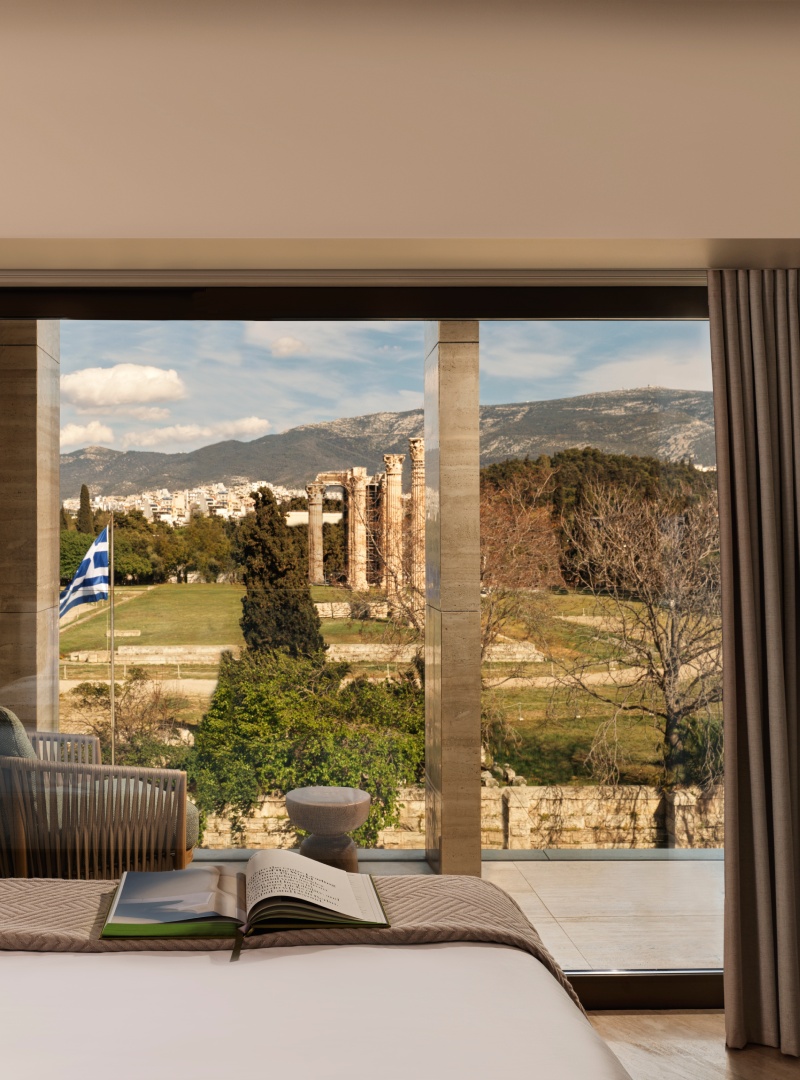
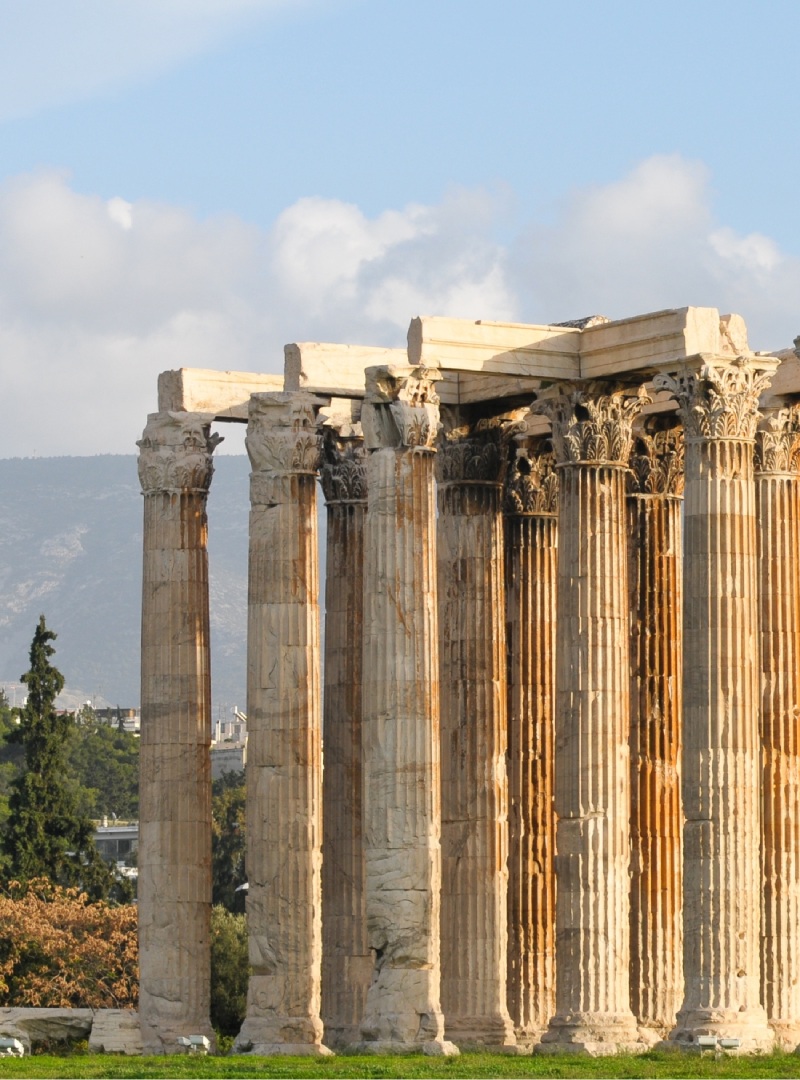
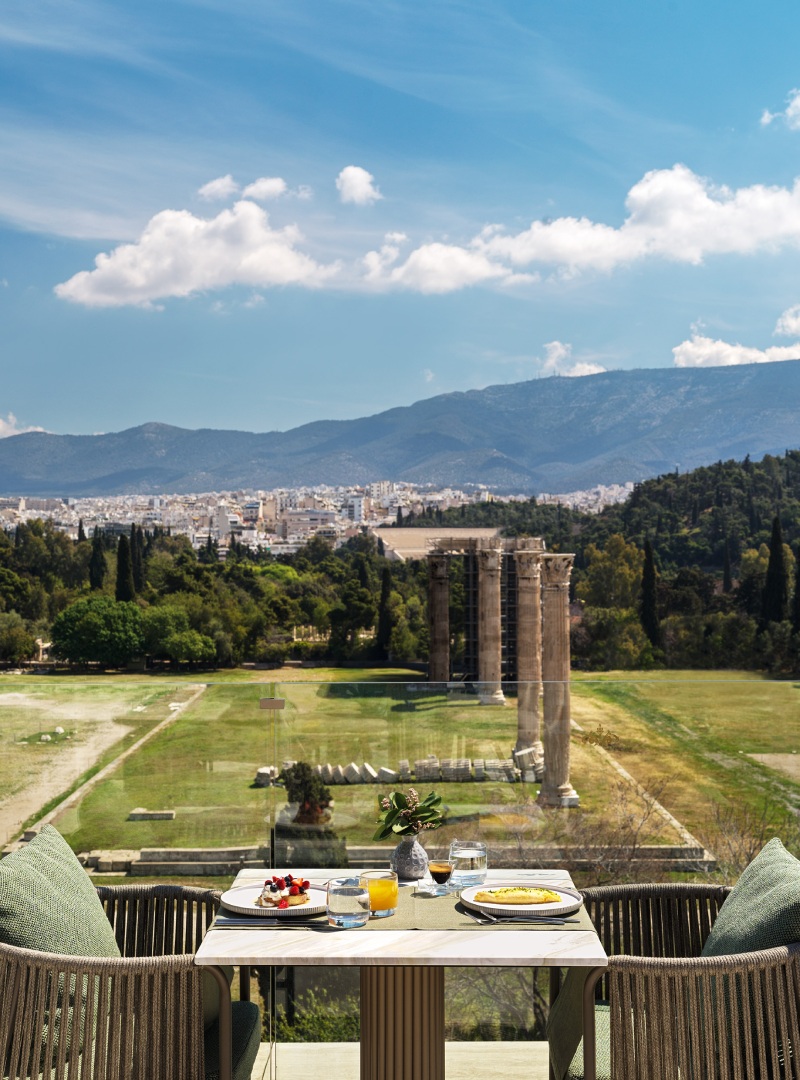
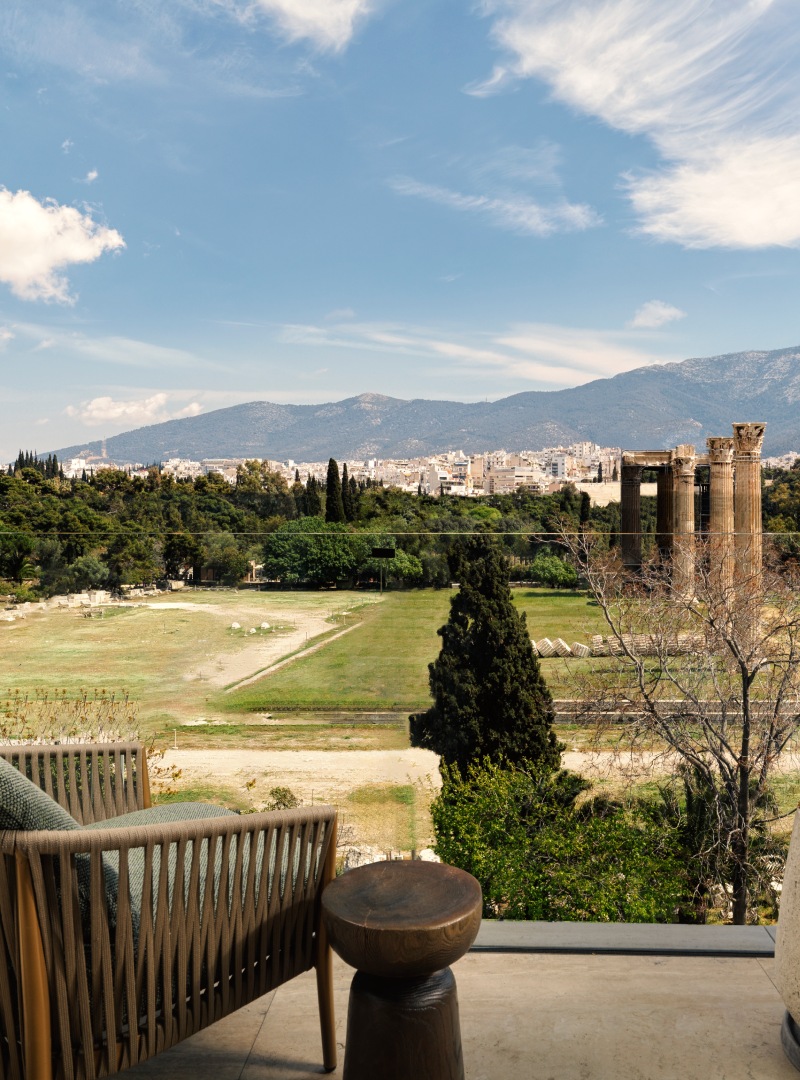
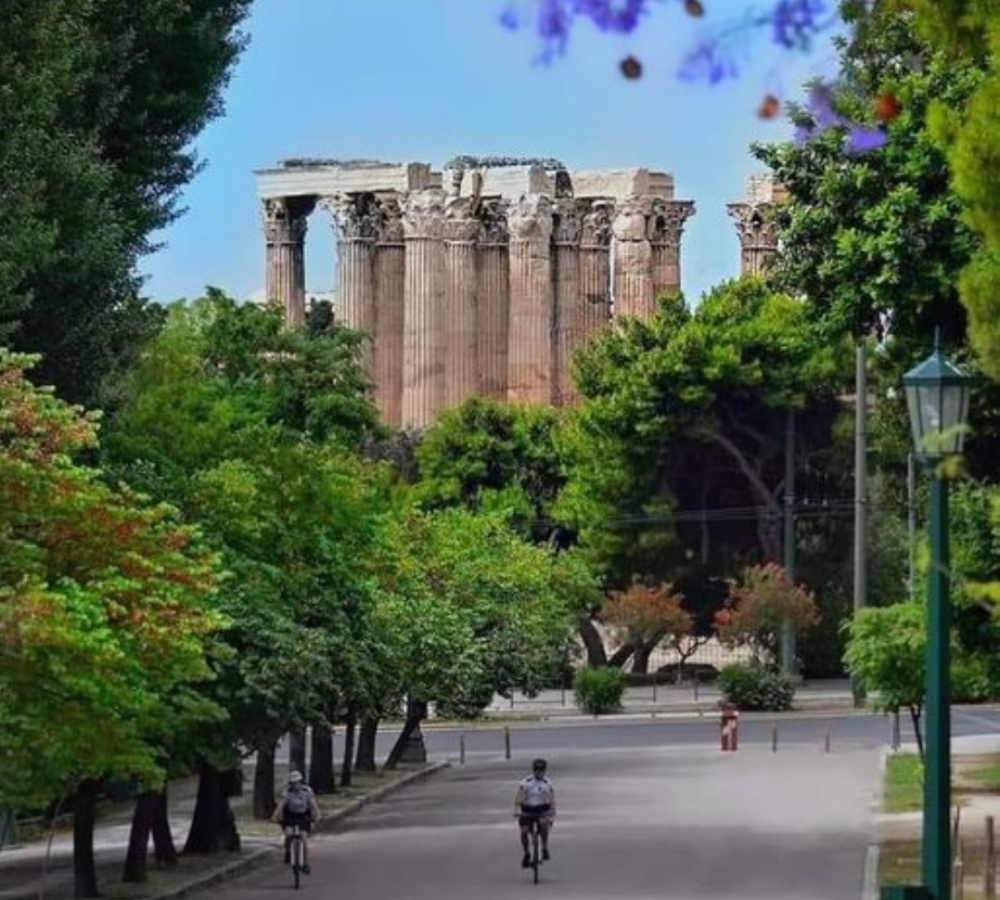
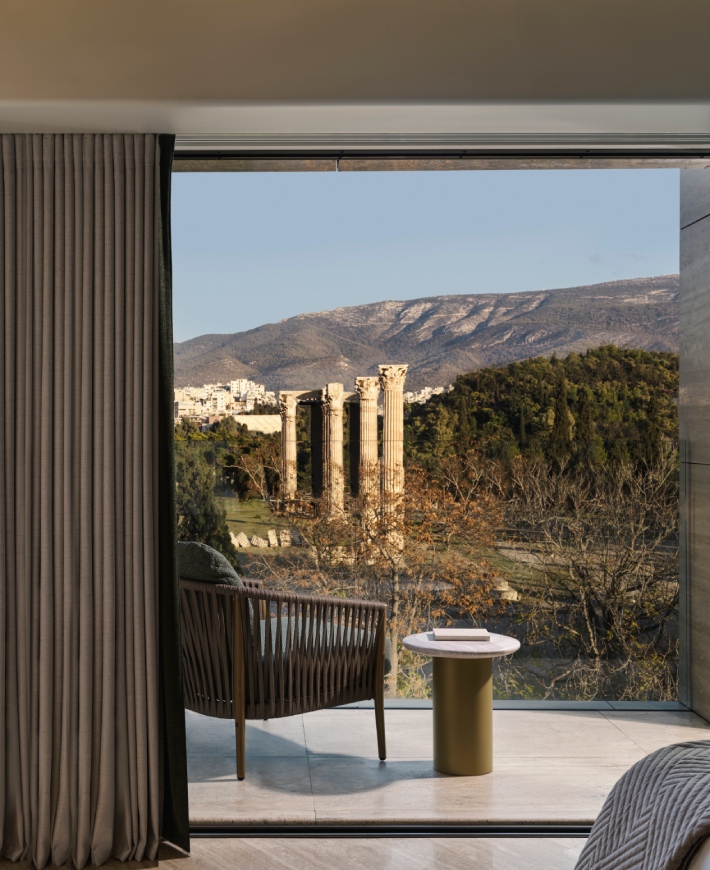
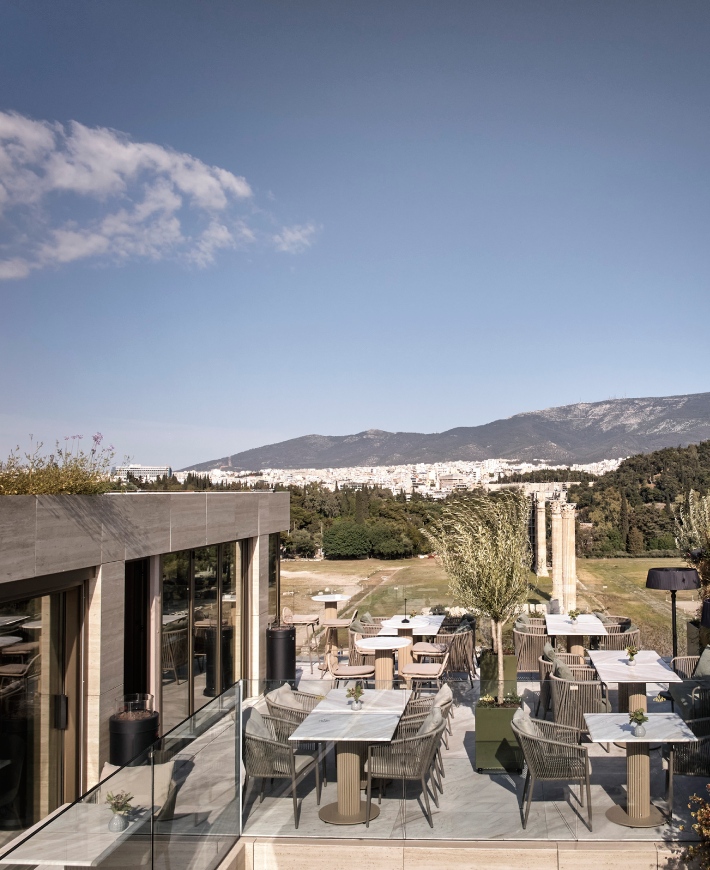
The Temple of Olympian Zeus —also known as the Olympieion or the Columns of Olympian Zeus, was the largest temple in Greece during the Hellenistic and Roman times. Today, it remains one of the most important and oldest sanctuaries in Athens.
According to Pausanias, the temple was founded by Deucalion, the progenitor of the Greeks, in honour of Zeus, as a gesture of gratitude for his salvation after the great flood. The construction of the great temple began under Peisistratus the Younger in 515 BC. It continued in 175 BC, with the same dimensions and proportions but in marble, in the Corinthian style. It was finally completed by the Philhellenic emperor Hadrian, who inaugurated it in 131-132 AD – about 650 years later.
The temple, one of the largest in the ancient world, was 110.35m long, 43.68m wide, had 104 Corinthian style columns, each of which was 17 meters high, 2.6 meters in diameter and weighed approximately 364 tons (Built from Pentelic marble).
Hadrian dedicated the temple to Zeus, placing inside two oversized gold-and-ivory statues: one of Zeus and one of himself. Numerous other statues adorned the temple’s precinct.
The temple began to fall into ruin in the 5th century A.D. Although the exact date of its destruction is unknown, it is believed to have been brought down by an earthquake during the Byzantine era, with its ruins later repurposed for other buildings.
The first conservation effort took place in 1835. In 1892, some of the temple’s archways were restored under the guidance of architect Ernst Ziller.
The site was excavated between 1889 and 1896 by Francis Penrose of the British Archaeological School at Athens, and again in 1922 by German archaeologist Gabriel Welter.
Of the 104 original columns, sixteen were still standing until 1852, when one was toppled by a major storm. Today, 15 columns remain.
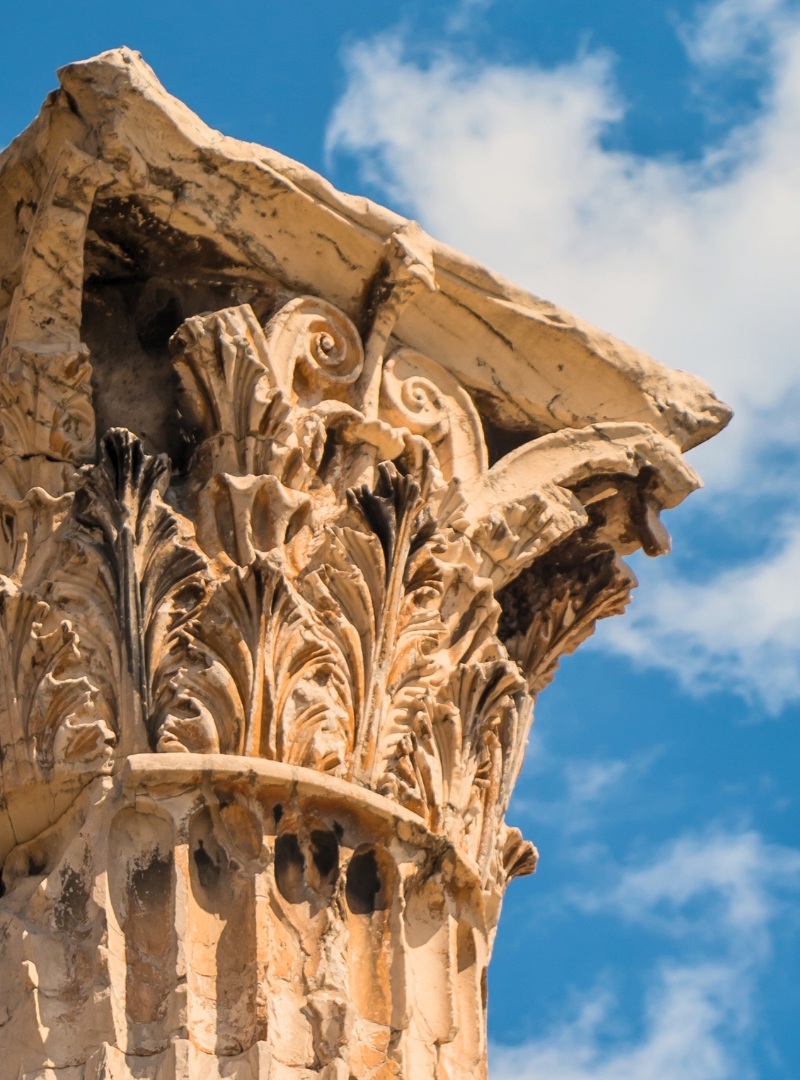
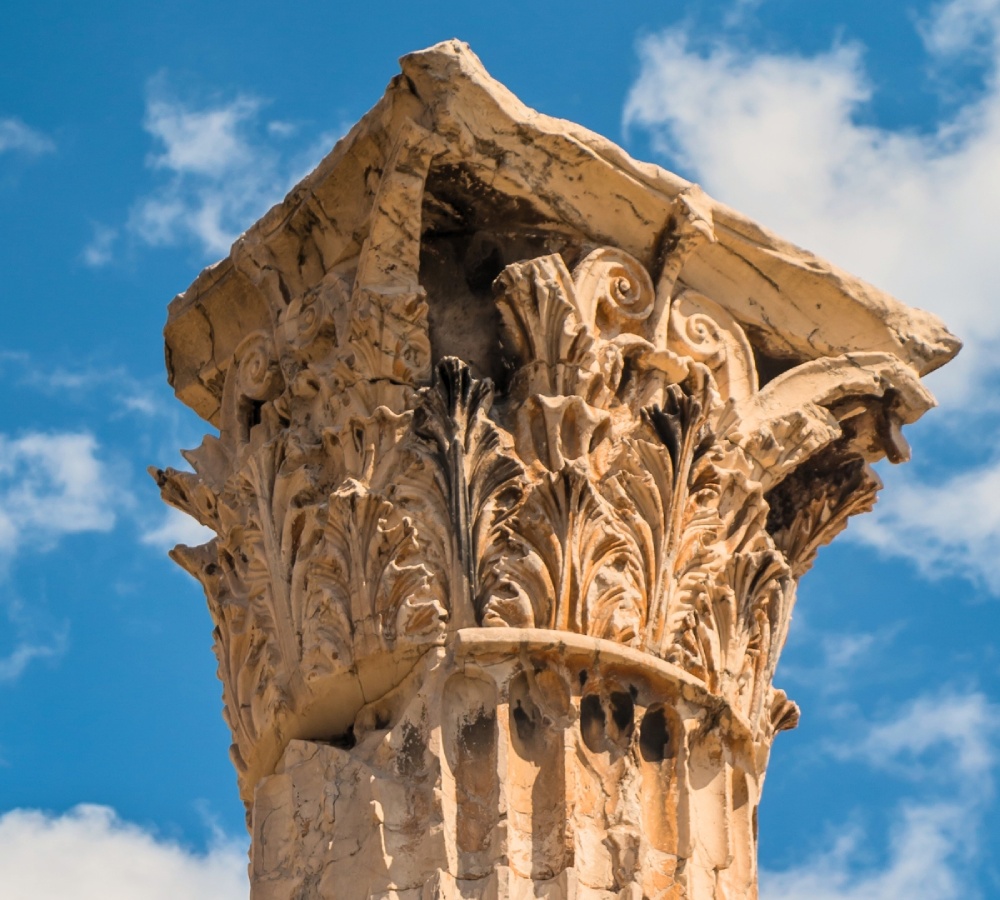
The Corinthian order is one of the three architectural orders of ancient Greek architecture—and the most recent of them. Its columns are distinguished by their elaborate capitals, which feature a tall echinus or “basket” design adorned with acanthus leaves. Among the three classical orders, the Corinthian is considered the most ornate and decorative.
The origin of the Corinthian capital is attributed to the sculptor Callimachus, who was inspired by a touching scene: a basket placed on the grave of a young girl in Corinth, filled with her toys and covered by a square tile. Around it, an acanthus plant had grown, its leaves wrapping around the basket’s form—thus inspiring the elegant capital.
The first known use of the Corinthian column appeared in the Temple of Apollo Epicurius. In Athens, the most prominent example of Corinthian architecture is the Temple of Olympian Zeus (Olympieion). Other notable monuments that feature this style include the Library of Hadrian, the Odeon of Herodes Atticus, and the Monument of Philopappos.
The Corinthian order was especially admired by Renaissance and Neoclassical architects, who embraced its decorative richness in their revival of classical design.
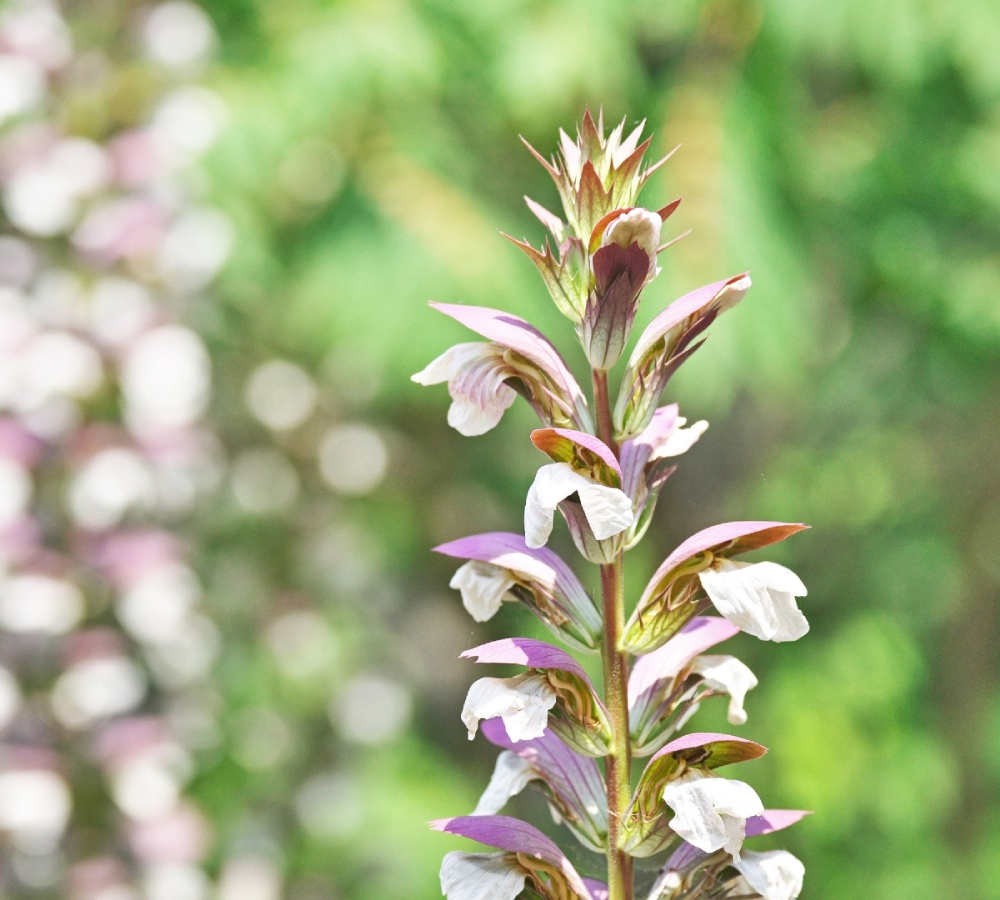
Acanthus is a genus of wild flowering plants commonly found throughout the Mediterranean region. Its blooming season typically spans from April to July. The most notable species is Acanthus mollis, recognized for its lush, soft leaves—unlike its thorny counterpart, Acanthus spinosus. In Attica, Acanthus mollis grows abundantly and can be seen in full bloom across nearly all archaeological sites during spring. Acanthus was the source of inspiration for the Corinthian rhythm/capital.
Its leaves (herb) are used in traditional Indian and Chinese medicine and are celebrated for their antioxidant properties. In parts of Southeast Asia, particularly Thailand and Indonesia, the leaves are used to brew herbal teas.
The name “acanthus” derives from the Greek words ac (thorn) and anthos (flower).